More songwriting: Highland Fugue

First up, the song! (I’m not going to do a recipe blog style thing where you have to read everything before getting to the bit you’re really after. 😛)

And now, the backstory!

At the end of last year/beginning of this year I put together a song called Sans Metronome, I definitely learnt a lot about mastering and getting the song to actually fit together properly, but listening to it back again after a month or so I realised it was too… upbeat for my usual taste in music (by far the biggest overall genre of music in my iTunes library is metal of some sort). I’m definitely not at the stage where I could play guitar or drums well enough to write a legit metal song, but I’ve always loved the sound of the minor key and wanted to do something a little closer to what I normally listen to.

I was mucking around with my MIDI keyboard with the extremely large selection of synth sounds in the Alchemy plugin in Logic Pro when I came across one called Cathedral Fugue:

Rather than being a single sound, it was arpeggiated so you’d press a single key on the keyboard and then starting from that root note it would play through a bar of 16th notes, and I absolutely loved the progression. I spent probably a couple of hours listening and playing it back on the keyboard trying to transcribe it into individual notes, and decided that I should build a song around it. I’m not good at all on the keyboard so I wasn’t going to attempt to actually play it for real, so I manually put the notes into the MIDI editor in Logic Pro and quickly realised I needed a few different variants to keep the song interesting.

After that I delved into Superior Drummer 3‘s library of MIDI grooves and fills just to put some placeholder drums in to play along to — not only does it have the actual drum sounds but it comes with a big selection of preset grooves that you can just drop into your DAW. I discovered while doing this that they’ve done a really clever thing and each “family” of presets has a number of different variants, each of increasing intensity, so you can mix and match and make your drums get more and more complex as the song goes on:

I had a lot of fun playing around with this and really getting a solid progression going as the song went through.

Next up was the bass guitar which I did a bunch of fiddling around with and then settled on a chugging rhythm mostly on A with a three note walk-up every second bar, then jumping to F then E, and a less chuggy rhythm for the chorus.

After that was recording the guitar, which I’m not hugely good at and it was just rhythm anyway since the “lead” role was already taken by the Cathedral Fugue preset. The song was in A minor and I went for a i-iv-V-i progression with a replacement of the V chord with a VI-V every second-ish repeat through.

Logic Pro’s “Flex and Follow” option was a god-send here, my timing is definitely getting better but it still wasn’t 100% for guitar or bass, and Flex and Follow analyses the beat of the audio you’ve recorded and just slightly massages it to fit against the actual project BPM so it all sits perfectly.

At this point I had a bit of a play around with a number of other synth sounds in Alchemy because the Cathedral Fugue sound wasn’t quite doing it for me. I kept the notes I had already written but flipped through the presets, and stumbled upon one called “Highlands Bagpipe Ensemble” which I immediately loved and really made the whole song click together. This inspired the final name of the song too, “Fugue” from the original Cathedral Fugue arpeggiation, and “Highland” because it sounds sort of bagpipes-ish.

Then finally I decided I should really actually record myself playing the drums instead of just having dropped a bunch of preset MIDI grooves in. I did really like the grooves themselves though, so I sat down and looked at the MIDI notes in Logic Pro and transcribed them and over the course of multiple sessions managed to actually play them back:

It wasn’t too bad at the beginning where the grooves and fills were simpler, but towards the end (like in the screenshots above) they were doing things completely out of the standard rock groove that I’m used to that at one point it took me a solid two hours just to get sixteen bars recorded because my hands and feet were just not cooperating. I recorded each section in chunks because there was absolutely no way in hell I was going to be able to just play along to the whole thing, and each section took generally between 10-15 looped takes until I got something that was correct. You can see in the full screenshot of Logic Pro here how the “Drums” track at the bottom is split up into each groove and fill section:

I had to go through and tweak a number of note positions because they were too far off the timing grid, but by and large I’m pretty happy with how little I did need to change! I didn’t need to do the full quantise option to squash everything into the nearest 16th note either. 😁

The very final step was mastering, and I used a compressor plugin for the first time (on the drums), gave everything a good solid listening through over and over again, changed the positioning of a few of the crash cymbals so the drums flowed better, then made sure it sounded good across headphones, through the guitar amp, as well as the HomePod and our big subwoofer system in the lounge room.

I think this is definitely the best song I’ve done so far, and I’m going to keep practicing some of those Superior Drummer 3 grooves and fills to keep in my repertoire in future because they sound great. And this was just one single family of grooves, there are tons more, but I think I have more than enough here to keep me busy for a goodly while. 😅
Sans Metronome

I mentioned in my last blog post that I’d recorded some drums at the end of October and was slowly building up a song. I’ve finally finished it and am absolutely stoked with the result! 🎉

I’m terrible at coming up with names for songs especially because none of mine have vocals, so I titled this one “Sans Metronome” since that was the whole thing to begin with (I fired up Logic Pro and just started playing the drums, without any explicit tempo set and no metronome). Pleasingly, I also subsequently realised that I actually broke the song up with minor fills every two bars and a larger one every fourth bar without even thinking about it so it flowed pretty naturally. I had bought the incredible Superior Drummer 3 plugin (at a significant discount from its RRP during their Black Friday sale, I should clarify 😅) and spent a fair bit of time getting my head around it, but otherwise didn’t do much of anything else with the song until the start of December when I was finally inspired enough to build on it.

I started by nicking Deb‘s general chord progression from I’m Staying Home This Christmas (the key was G Major with a I IV V I progression, so G C D G and the occasional Am thrown in) and once I had that, I began with the bass line which started as a very simple and uninteresting set of quarter-note triads that I deleted and redid with a faster and more interesting feel once I started recording the rhythm guitar section. After that it started coming together more quickly, I recorded the lead guitar part piece by piece with my Stratocaster which also ended up getting deleted and rerecorded with a faster pace, which then brought on some more changes to some of the parts of the bass guitar.

One of the things in music in general I’m a big fan of is the kind of “wall of sound” effect where there are just layers and layers of sound, and I wanted to try to recreate that a little bit with this song too. I used Logic Pro’s built-in “Alchemy” synthesiser plugin, manually wrote in the MIDI notes to match the lead guitar (this is the one part of the song I didn’t actually play on an instrument myself), and then had far too much fun mucking around with the twelve gajillion presets to see what sounded good. Originally I had a bells sort of sound for the choruses but on listening back to it, it sounded too Christmasy so I ditched that and went for a bit of a more pronounced synth pad sound similar to what I had done for the rest of the song, one that more floats in the background rather than particularly drawing attention to itself.

And then finally one of the really key parts once you’re done recording is mastering! One of the features that Apple introduced in a recent Logic Pro update is the Mastering Assistant:

Mastering Assistant is a plug-in designed to make your final mix sound great across any playback device. By meticulously analyzing audio, it automatically fine-tunes the sound through dynamic adjustments, precisely balanced frequency corrections, and additional sonic enhancements. Mastering Assistant also provides dynamic processing and spectral shaping inspired by boutique analog hardware devices used by professional mastering engineers

I fired that up and it did a great job, but I also paid careful attention to the relative sound levels of each track, and actually ended up cranking the volume down for almost everything to some degree, tweaked the sounds of the snare drum and ride cymbal to make them less and more pronounced respectively, and just generally really listened with a critical ear to make sure everything sounded correct and sat well together. I made sure to listen not just on my Audio Technica headphones that I normally use, but also through my Blackstar guitar amp that has a 3.5mm input, our HomePod, and through our big speakers plus subwoofer in the lounge room. The latter three were really interesting because they made me realise I needed to make some more tweaks to get the track sounding good.

And now finally after many hours of work, it’s finished. 🎉 I’m probably not going to do another one of these particularly soon, especially since I’m back at work tomorrow after having had three weeks off and loads of time to fiddle around, but I’m feeling a lot more confident now! 😁

A musical journey

Sixteen years ago today, I bought my first guitar! It was a Fender Squire in a $400 everything-you-need starter kit, but I never managed to stick with it enough to learn much of anything, barely even the most basic open chords. The learning DVD I bought was boring as hell, the guitar was really heavy and kept going out of tune, and the amplifier it came with sounded awful.

I didn’t get rid of it though, it moved from house to house with us, and it was just sitting in our back room collecting dust when on a lark during the first COVID lockdowns in 2020 I decided to pull it out and maybe have a stab at learning to play again given the sheer richness of learning resources to choose from these days. First thing to do was to get it tuned up, and the very first string I tried to tune immediately snapped. I looked down the neck and realised that it warped to all hell and back, and given I never particularly liked it—in either a nice-to-play or an aesthetic sense—I decided I’d actually splurge a bit and spend more and get a guitar that made me want to pick up and play it.

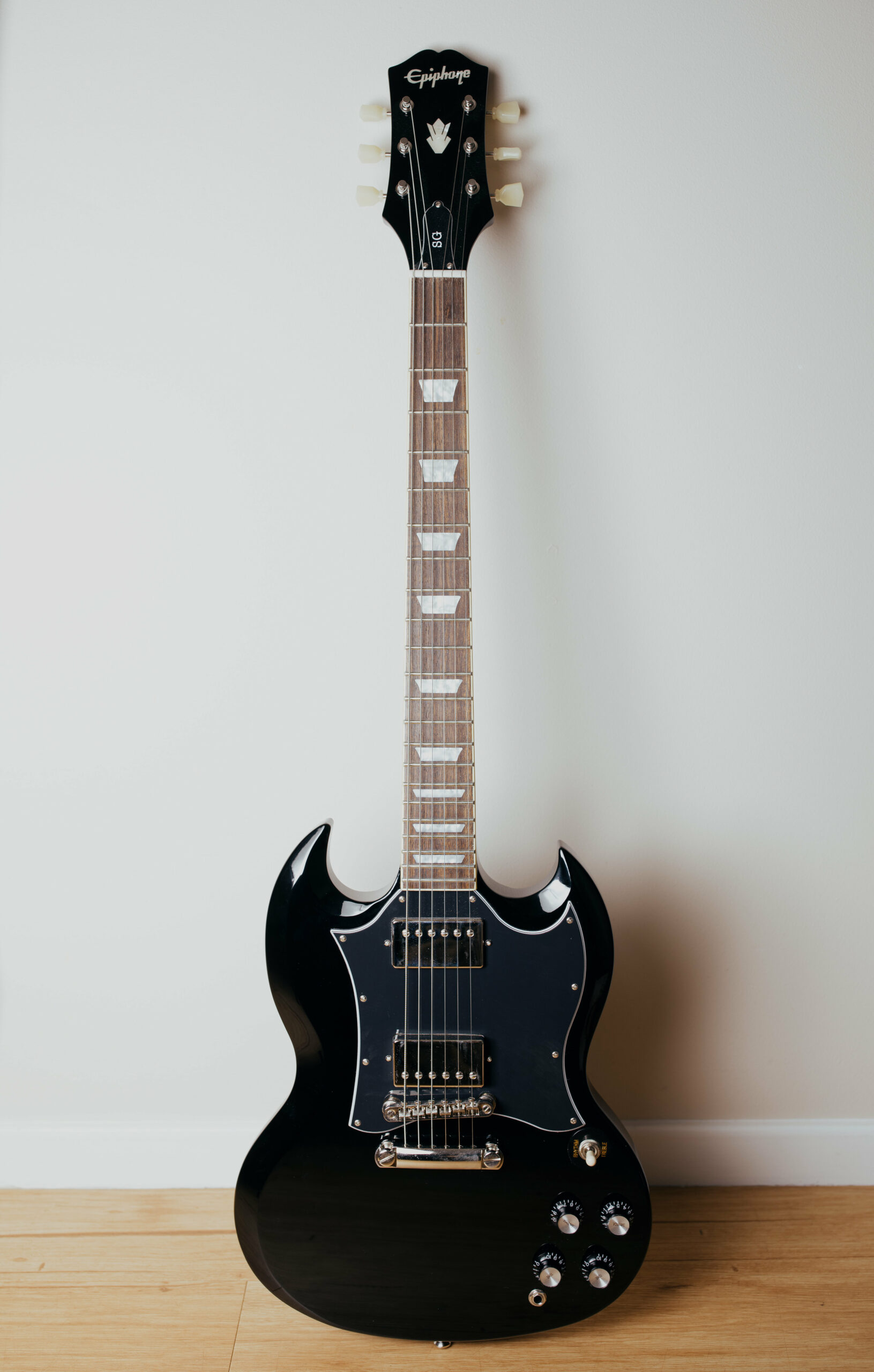
After a ton of research on learning all about guitar pickups and where the sweet spot is for a guitar that’s properly good in its own right but not unreasonably expensive, I settled on an Epiphone SG Standard in ebony.

A photo of a shiny black electric guitar sitting sitting upright against the wall.

It arrived in mid-June and looked absolutely mint. For actually learning how to play again, I started with Fender Play. It was pretty decent, and absolutely a huge step up from the extraordinarily dry learning DVD I bought in 2007.

Then come mid-2021 we had more lockdowns, even harsher than 2020’s, where we weren’t even allowed to travel more than 5km from our homes. At some point during all this I randomly remembered how much I’d always enjoyed playing the drums in Guitar Hero back in the day, and that a friend had mentioned he had an electronic drum kit from Roland, and I thought, “Why not learn to play the drums too!”

Cue more research, and I settled on Roland’s TD-17KV drum kit.

A photo of an assembled Roland electronic drum kit.

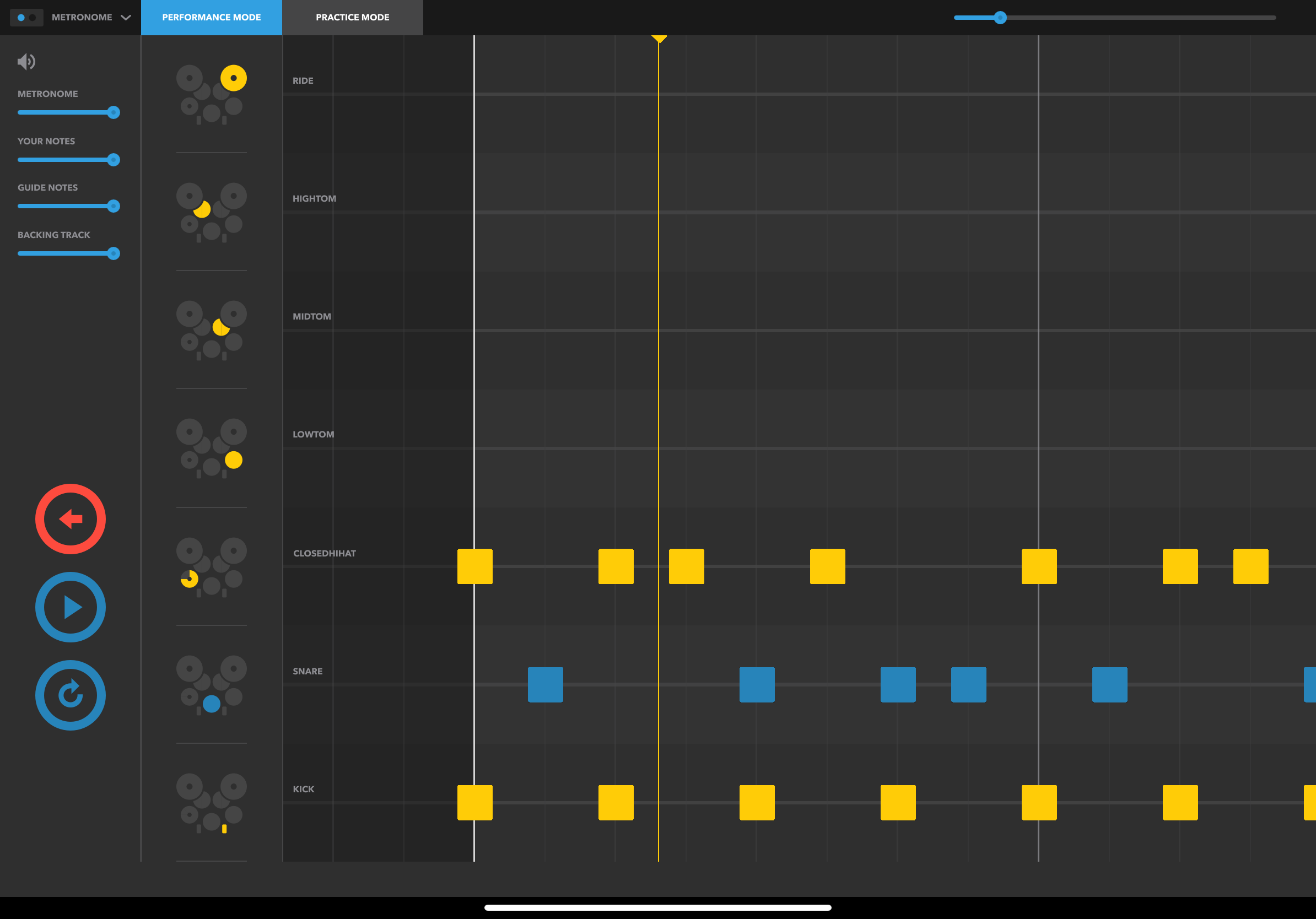
It arrived at the end of July and came with a trial of Melodics, which is a learn-to-play drums app (and also keyboard and also synth pad) where you plug the drum kit into your iPad or computer and it has an almost Guitar Hero-esque system where it scrolls across and you hit the correct pad or cymbal with the particular hand at the right time.

A screenshot of the iPad app "Melodics". It's showing a pattern of notes to hit on the drums, right/left/right/right/left/right/left/left on the hi-hat and snare, so you end up doing in groups of three, but for the kick drum it's on every second note.

It works really well, but while I didn’t want an actual in-person teacher, I felt like I needed something a bit more than just learning from the app. I discovered this drum teacher who’s based in the UK, Mike Barnes, and he puts out a ton of great videos on his YouTube channel, they’re really clear and he does them all in one single take rather than that thing that so many people on YouTube do where they’ll edit out every little bit of silence or gap. He’s got a Buy Me A Coffee page too where you can subscribe for a monthly fee and he’ll send you notations of the stuff he puts up on YouTube, works with you for a practice plan, and you can email him with questions or to get feedback on things you’re working on. I signed up to that in mid-2022 and it’s been really good, highly recommended if you’re learning drums!

On the drum kit itself, I’ve since replaced the stock hi-hat pedal and cymbal with a VH-11 on a proper acoustic hi-hat stand, and it physically moves open and closed and you get a much better sense of how to manipulate the pedal to get the sound you want.

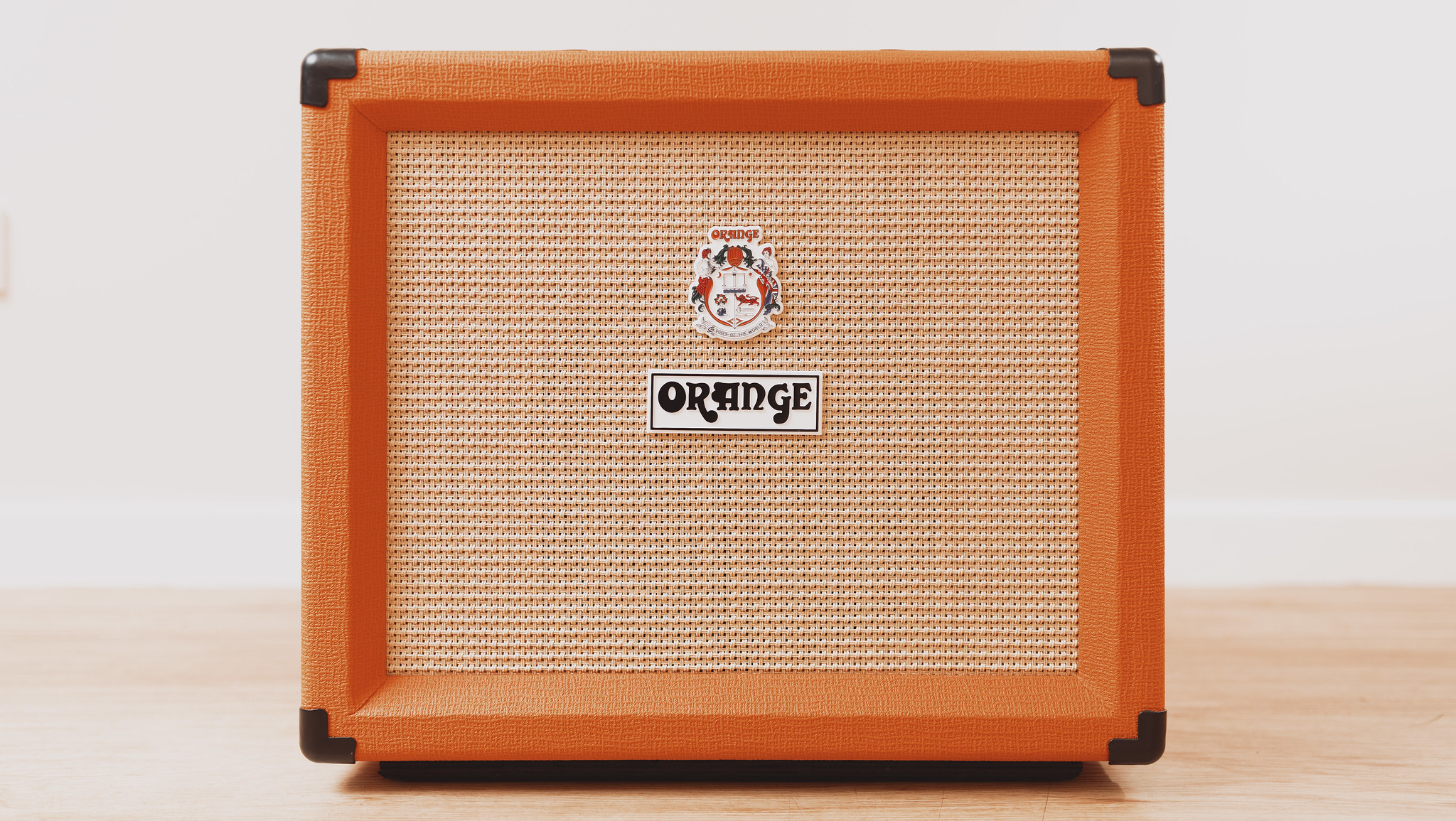
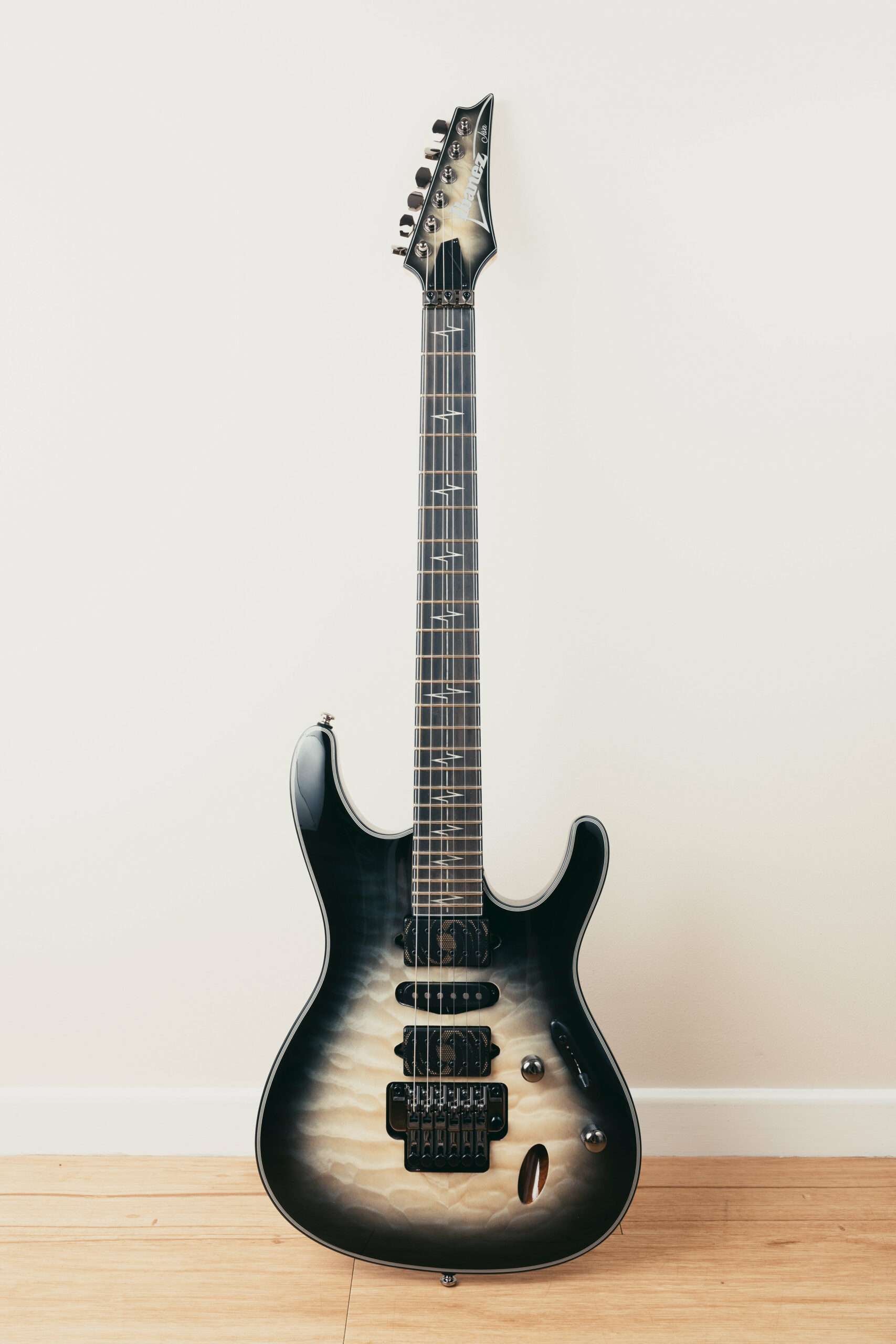
I was thoroughly enjoying learning all this new stuff, and at the end of July 2022 I bought a for-real guitar amplifier with vacuum tubes, the extremely eye-catching Orange Rocker 15 Combo, and in August bought some guitar pedals and decided to treat myself to a new guitar. Nothing was wrong with the old one but I wanted some more variety. I did a bunch more research and became completely obsessed with Nita Strauss‘ signature Ibanez JIVA10 guitar, the amount of different tones you can get out of it thanks to the two custom humbucker pickups and the middle single coil is brilliant, and it looks so pretty to boot. 😍

Also at the start of August that year I ditched Fender Play and signed up for Guitar Zero 2 Hero, which is a course by this Aussie guy based in Melbourne.

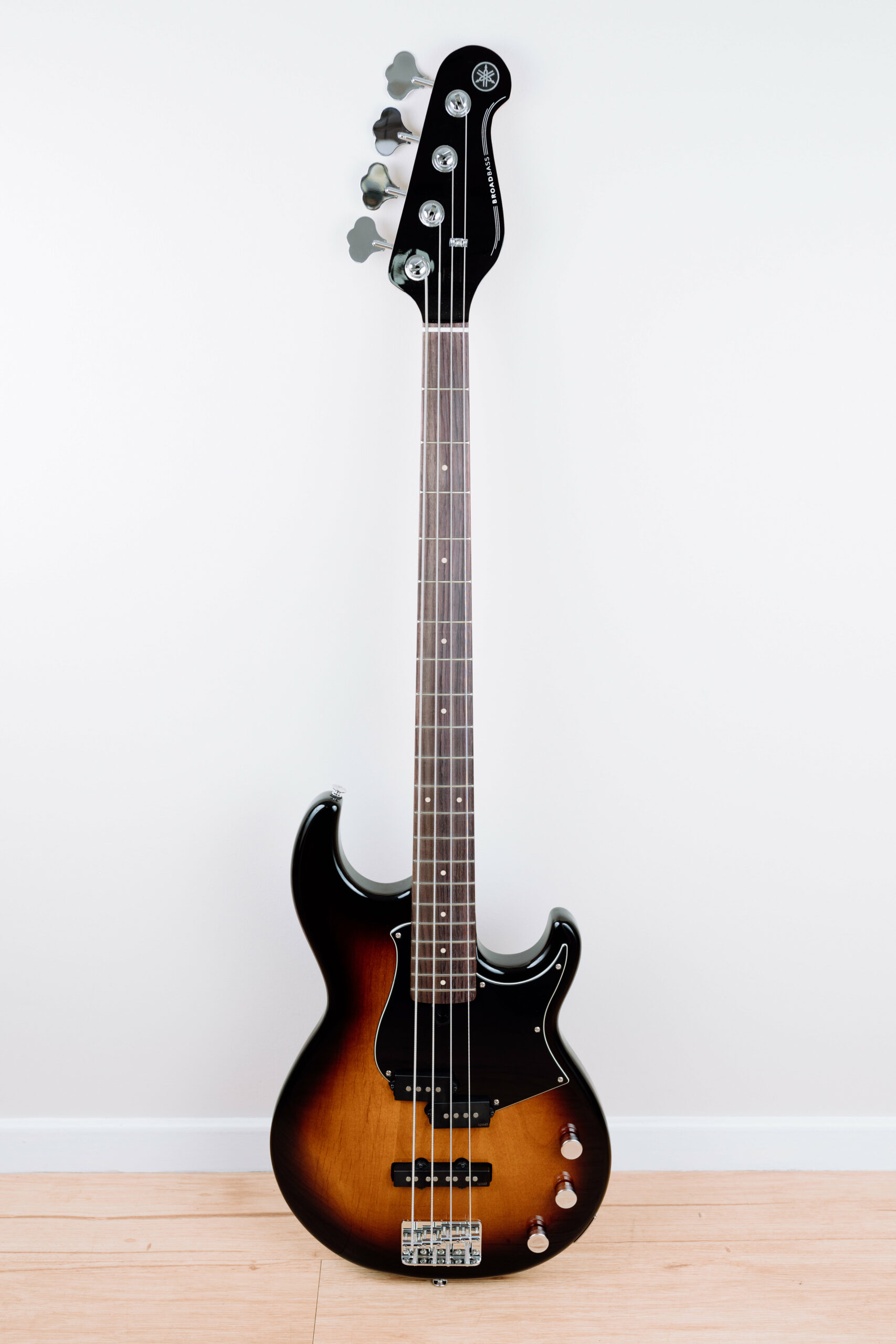
For my 40th birthday this year, I decided to keep expanding my musical repertoire and bought a bass guitar and amplifier! A friend of mine had mentioned that he had bought a bass and was learning to play which is what inspired me. Cue another bunch of research and I landed on the extremely handsome Yamaha BB-434 bass and another Orange amplifier.

A photo of a Yamaha BB-343 bass guitar propped up against the wall. The body fades from black around the edges into a dark rich orange/red wood in the middle
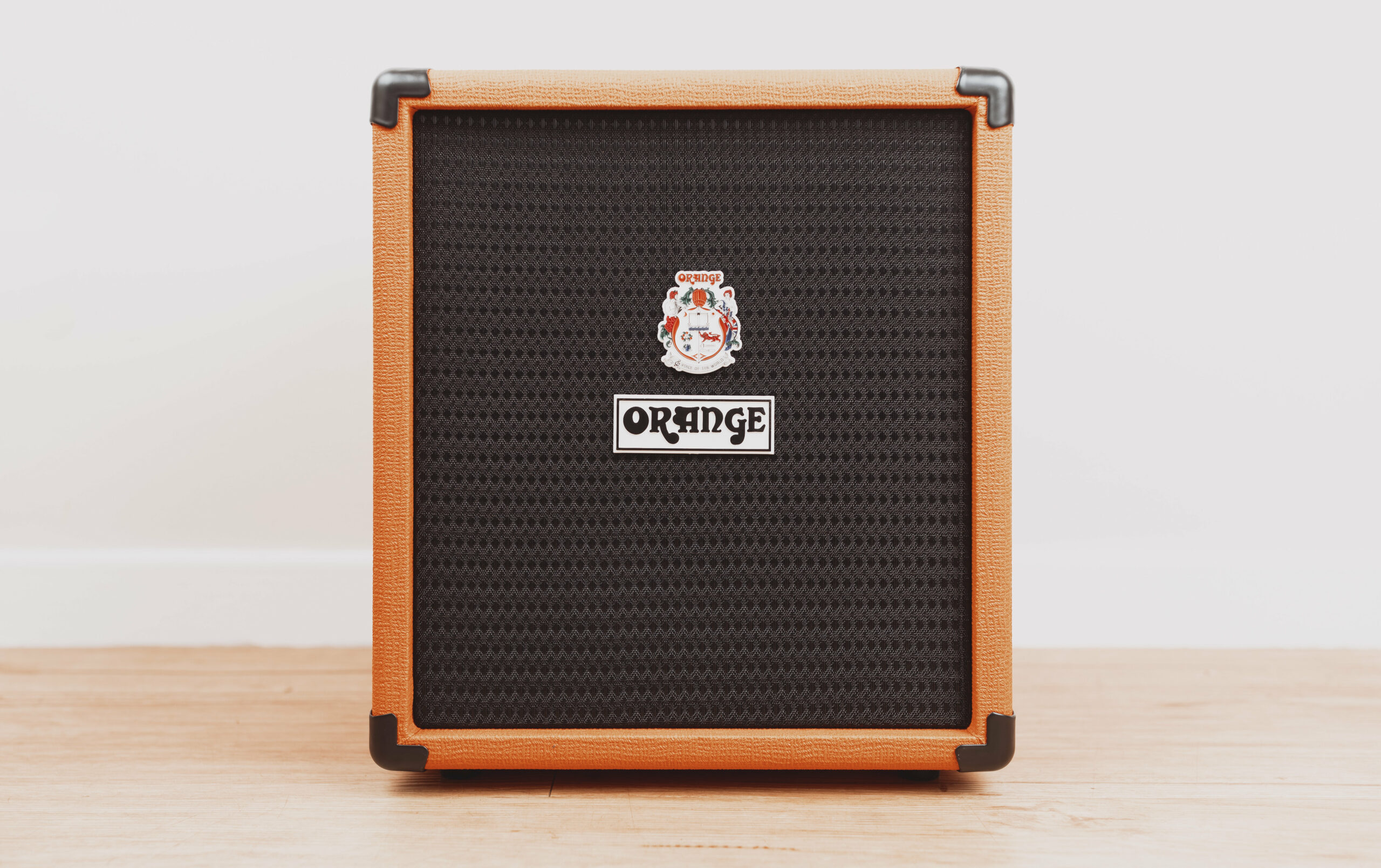
A photo of an Orange Crush Bass 25 bass guitar amp. It has a black mesh on the front with the rest of it being the customary bright orange colour

I’d seen many recommendations for the “Beginner to Badass” course at bassbuzz.com so I signed up for that and can confirm it’s excellent. You get a really good feeling of progress and learning as you go through the course and it makes you want to keep playing more, and the guy that produces it gives a really good indication of when you should continue to the next course versus getting stuck in one lesson and losing motivation.

I actually ended up realising that I wasn’t feeling that sense of progress or learning from the Guitar Zero 2 Hero course and was kind of stuck in the mud and hadn’t been playing it. So I ditched that one and found multiple recommendations from people on the bassbazz.com forums saying the closest thing to the Beginner to Badass course for guitar is Justin Guitar (which weirdly is another Aussie guy). I’ve only been doing it since the end of September this year, but it’s very promising so far and I’m getting more of a feeling of progress. In the almost three and a half years years since I bought my guitar I still haven’t managed to get anywhere beyond basic open chords and a couple of power chords from the Fender Play course, but I’m feeling more motivated now to actually stick with it and learn, and I think the Justin Guitar course is helping.

And then finally, because I’m already subscribed to Melodics and it also includes a keyboard course, I bought a MIDI keyboard at the end of last month as well. 😅

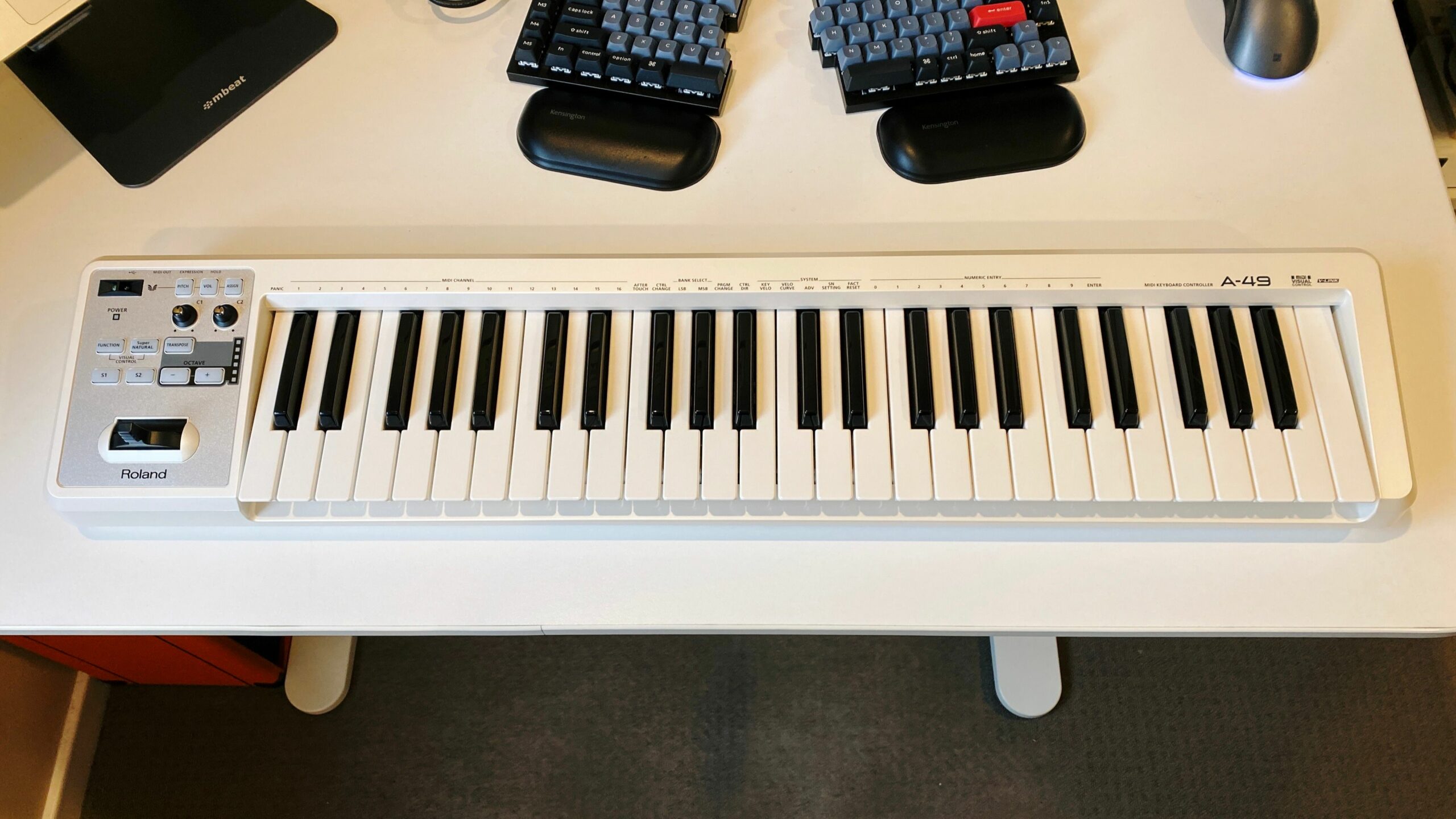
A photo of a Roland A-49 MIDI keyboard in white sitting on my (also white) desk. As the name suggests it has 49 keys, and has a number of buttons and knobs on the left hand side.

I actually bought one waaaay back in 2004 but in a similar vein to what happened with my original guitar, never stuck with it due to a lack of good learning resources.

In terms of how well I’m going with things, I’d say I’m far and away best at the drums. Melodics has definitely gamified things and you get “streaks” for practising for just five minutes a day each day, so during my lunch break I’ll go out to the back room where the drum kit is and get my at-least five minutes done. I also discovered this guy Jack Curtis who makes drumless backing tracks, they all come with both regular versions and ones with a click track, and they’re such fun to play along with, so between that and Melodics, all up I’ll probably be playing drums for a good 30-40 minutes every day and I think it definitely shows.

At the start of this year I recorded myself playing along to one of Jack Curtis’ tracks and even between then and now I can see I’ve come quite a lot further again. I need to get around to recording myself playing some more of those, maybe even that same song, but the latest highlight has been playing the drums on this collaboration with some friends. 😁

In terms of guitar, it’s been less good, though I’ve made a few recordings. This one from May of 2022 really clearly shows how not-great I was at keeping in time, I recorded another in December which was a fair bit better, and added bass to it in April of this year. Finally, this from May is better again, playing single notes rather than chords but really only from a single string at a time.

My current goal is to really stick with learning the guitar and get past the basic open chords and be able to properly do justice to the JIVA10 I bought. I started again from the very beginning with Justin Guitar just to be sure I covered everything, and he’s got a separate music theory course that I think I’ll start on as well, and will hopefully report back with good news! 😛

New shiny: 11″ iPad Pro and Apple Pencil 2

I bought an iPad mini 2 back in April of 2014, which was the first mini with a retina display. It got fairly slow with the upgrade to iOS 11, and even though iOS 12 gave it a bit of a shot in the arm, it still ultimately struggled to do much beyond very basic web browsing and social media things — not entirely surprising given it’s five years old at this point. Apple announced the latest version of the iPad Pro at the end of October last year, along with an updated Apple Pencil, and all the reviews said the iPad was absolutely gobsmackingly fast (to the point where it beats all but the highest-end Core i9 15″ MacBook Pro in a number of CPU benchmarks), so I decided to finally retire the iPad mini and upgrade.

Holy. Crap.

It’s honestly one of the most impressive pieces of technology I’ve used in recent years; almost the entire thing is screen, there’s only enough bezel to comfortably hold the edges and no more, and it’s about as thin as I recall the iPhone 4/4S being, with the same industrial design. I’m still on the iPhone 7 so haven’t used Face ID before, and it works like magic. The screen has a 120Hz refresh rate as opposed to the standard 60Hz of most displays, and it means that everything feels just subtly more fluid and responsive. Everything I do on it is just totally effortless, it responds immediately without any hint of lag or hesitation.

However, I think my favourite part so far is the Apple Pencil. It’s much the same as the original in terms of usage, but magnetically pairs and charges on the right side of the iPad, and has an option to double-tap the Pencil itself to switch between your current drawing tool and the eraser tool. It has pressure and angle sensitivity, so can behave exactly like an actual pencil. Turn it sideways and use the edge and you can do subtle shading, and the harder you press the darker the shade.

The built-in Notes app has basic Pencil support, but I’ve been using Procreate — which I actually originally bought on my iPad mini but didn’t use very much due to it being a pain trying to do any sort of detail with a finger — and it’s so awesome. It’s absolutely not going to win any sort of awards, but I’ve done two things so far and am really happy with both of them.

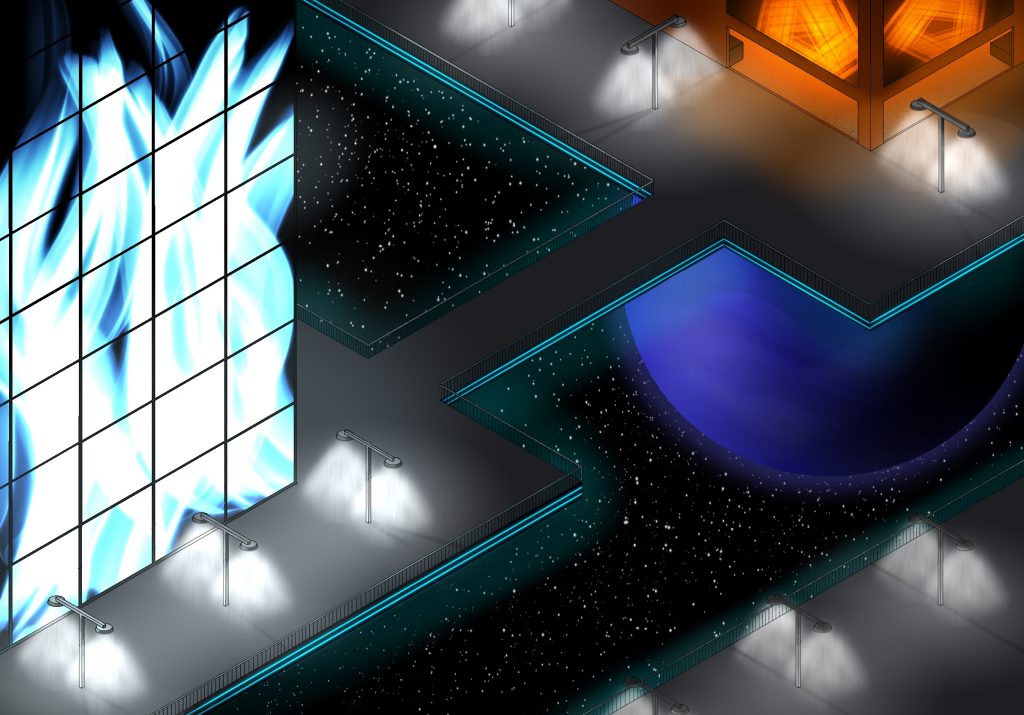
The first was done with the drawing assist turned on and an isometric grid, followed by a whole bunch of layers to get the lighting looking right.

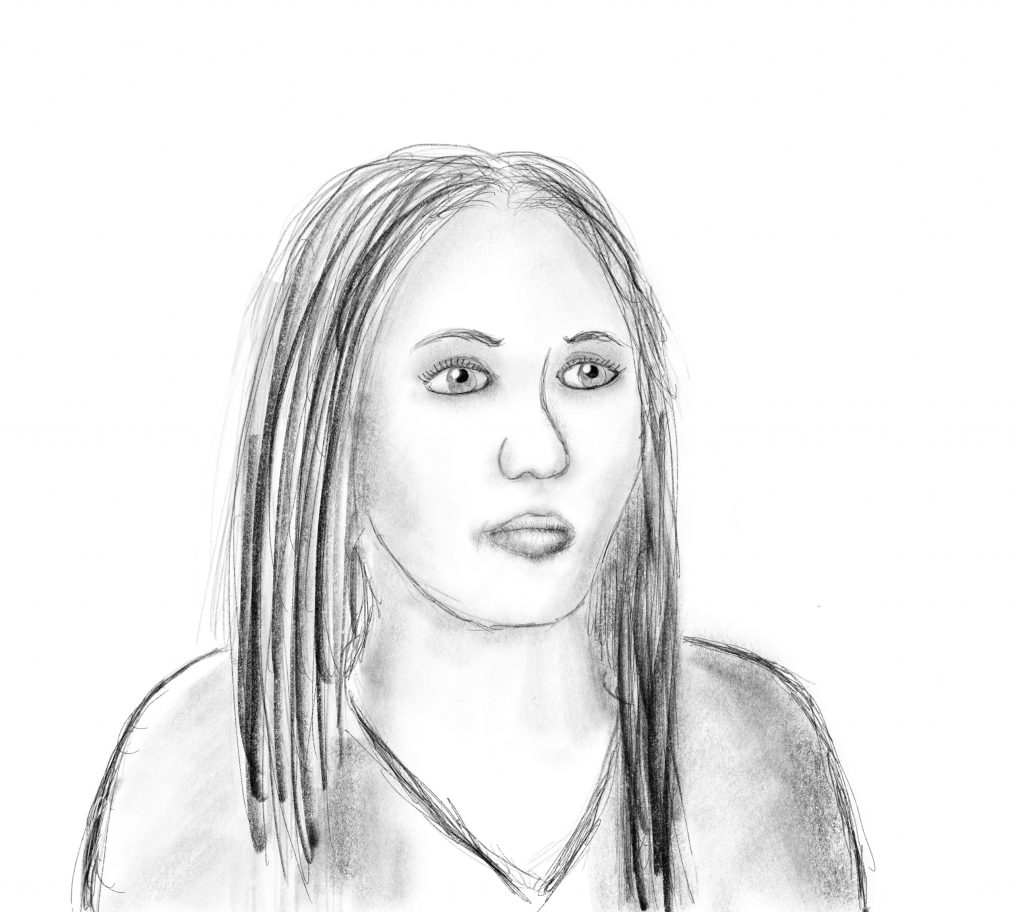
And the second is just a pencil sketch. Like I said, objectively it’s not very good, but not having done anything like this before, I’m still very pleased.

I had a photo open in Safari in split-screen view beside Procreate, the woman in my sketch looks absolutely nothing like the photo but it was more just generally to get the angles right. 😛 My having done photography definitely helped with the shading because I could easily visualise in my head how the shadows would fall.

I need to make sure I keep up the practise so I can improve!


I also remembered that GarageBand on iOS is a thing, and goddamn, it’s also impressive. It’s the same idea as in GarageBand on the Mac with adding preset loops of instruments and combining them together — or recording your own — but they’ve done an amazing job of translating that to something that’s usable with a touch interface. I’d made a couple of songs in GarageBand for Mac previously (nearly twelve years ago now, jesus), but not really anything since.

I bought a USB-C to 3.5mm headphone adapter for the iPad so I could use my big Audio Technica headphones — doing audio work requires very low latency, and Bluetooth has way too much latency, to the point where if you try to use Bluetooth headphones with GarageBand on iOS it’ll give you a big warning to that effect — and did a bunch of dabbling the other day, and made another new song!


I’m very interested to see what Apple does with iOS 13 this year, because the iPad Pro’s hardware is astonishingly capable, but it feels like the software could be doing more. I’ve hooked up our spare Bluetooth keyboard and dabbled around in that and it’s neat, but there’s not enough support for keyboard shortcuts even in Apple’s own applications . In Messages, for instance, you can use Cmd-↑ and Cmd-↓ to switch between conversations, but there’s no way to get the focus back to the input field once you’ve done so… you have to reach for the screen. There’s an official Apple keyboard cover that turns your iPad into something resembling a laptop, but I don’t know how well it would work remaining steady on a lap on a train.

All that said, I’m absolutely stoked with the new iPad, and am seriously keen to see the software catch up to the capabilities of the hardware!

I whipped up another song last night!

Symphonic

I also started going through my old LJ entries and adding tags. And my website has at least slightly more content than it did before.

I’ve been mucking around in GarageBand over the past few nights, and have put together a song!

Thunder (192Kbps AAC)

Let me know what you think. 🙂 (And don’t worry, it’s not evil growly metal. :P)